

From the Office… to the Farm… to Stemz
I didn’t come to flowers through a design studio. I came to them through century-old family land, a career shift, and the very humbling reality of trying to make a farm business work.
Before Heritage Harvest Farms, I spent two decades in marketing, brand strategy, and product development. In the corporate world, I researched markets, developed products, commercialized them, priced them, and built stories around why they mattered.
On paper, that should have prepared me well. And in many ways, it did.
But farming, as you know, has a way of stripping things down to the truth.
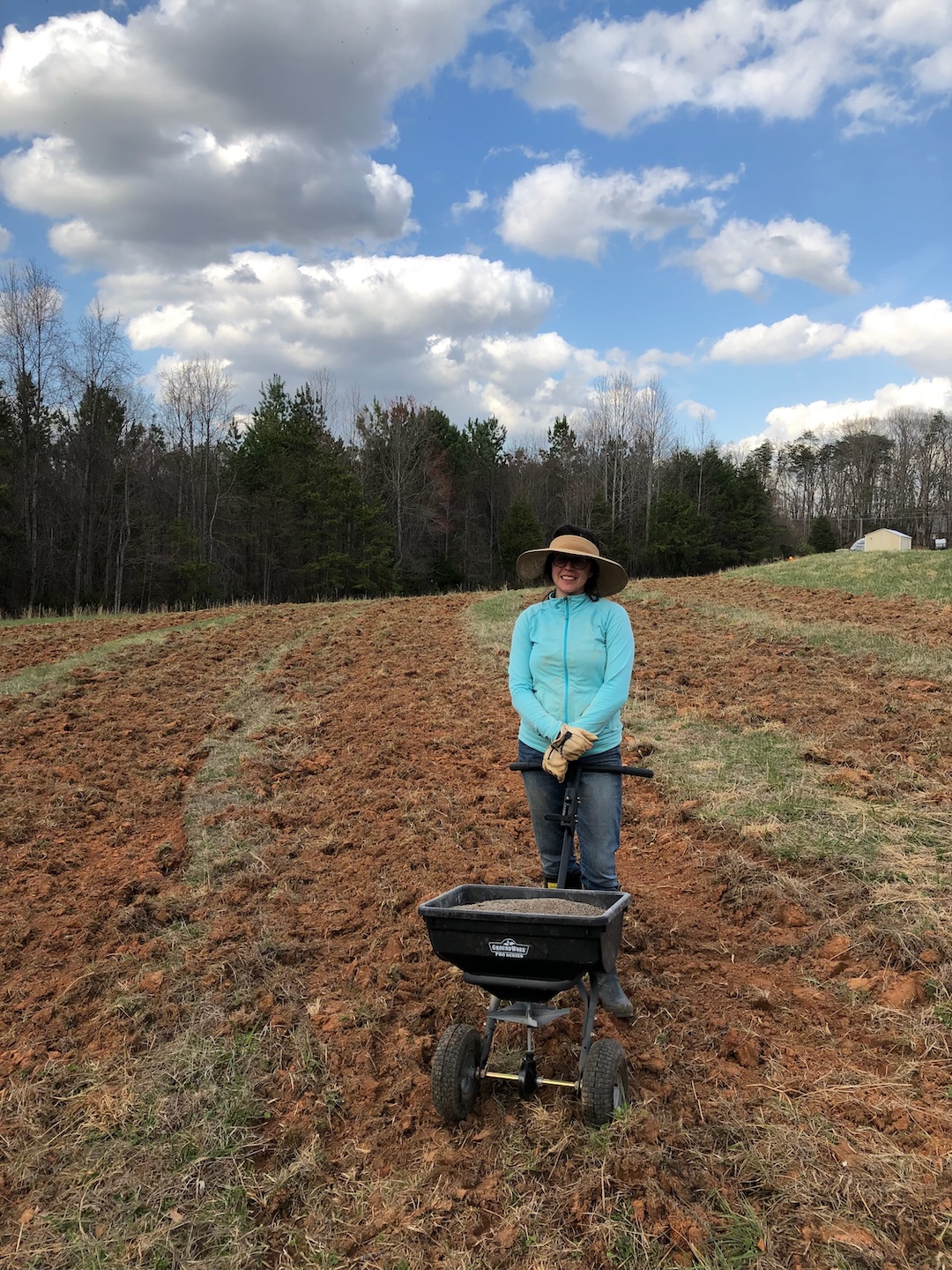
Restoring a Family Farm
When I left the corporate world, it was to restore my family farm in North Carolina, with two babies in tow.
Heritage Harvest is a Century Farm, land that has been in my family for generations– but had no infrastructure. Bringing it back into active production was deeply personal. It was also harder, more humbling, and more complicated than I expected.
Today, we grow flowers, mushrooms, heirloom food, and have an apiary. And while I took agriculture night classes at the community college, countless seminars, ag conferences, and time spent working on other farms, starting my own farm taught me some of the hardest business lessons of my life.
Even with an extensive background in product development and pricing, I had a very hard time figuring out how to make flowers profitable at the beginning.
What varieties will sell here? How much should I charge? What did the market expect? What was considered florist-level quality? When was something worth harvesting, and when was it better left in the field from a labor standpoint? How much inventory should I bring to market?
And how in the world was I supposed to grow, harvest, sell, deliver, market, and manage all of it while also being a mom and building a farm from the ground up?
This was before there were so many flower farming schools, courses, blogs, podcasts, community resources, or Stemz. Today, there is a wealth of knowledge for new growers, and I am so grateful that our team has helped build a key piece of that. But at the time, I often felt like I was going it alone.
And it wasn’t working.
I remember leaving farmers markets with more than half the flowers I brought to sell still packed in the van. I remember unloading buckets of beautiful stems that had taken months to grow, only to compost them because they had nowhere else to go. There were days I cried into those flower buckets.
Not because I didn’t believe in the flowers or in my ability to grow them. But I was realizing the hard way that the business model that so many were trying to make work – wasn’t.

The Hardest Part Wasn’t Just Growing
Like many farmers, I quickly learned that growing beautiful product was only one part of the job. Selling it consistently and profitably was something else entirely.
There were volume swings. Weather swings. Variety and quality questions. Pricing questions. Market uncertainty. Wholesale relationships to manage. Last-minute requests. Delivery logistics. Perishable inventory. And no real system to hold it all together.
Some weeks, we had more flowers than we could sell. Other weeks, we could have doubled or tripled sales if we had the right varieties and quantities.
The issue was not that local flowers lacked beauty or value. It was that the path between farms and buyers was too fragile, too fragmented, and too hard to manage while also actively farming.
We needed a better way to make regional flowers work for farmers and buyers in real life.

Finding the Missing Link
That is where Amy and I found each other – introduced through another original Stemz farmer, Blossom & Branch. Thank you, Kristy!
We came from opposite sides of the same problem. Amy understood the designer experience because she had lived it for years in weddings and events. I understood the farmer experience because I was living it in real time. She knew what designers needed to feel confident using regional flowers.
I knew what tools farmers needed in order to grow for those buyers without burning out or watching good product go unsold – and while making enough money to turn it into a career instead of a hobby.
Together, we saw the same gap from two directions. Stemz was born from that shared belief: regional flowers can scale, but only if the system supports both sides.

How my Background Matters Now
My corporate background still matters deeply to the work we are building now.
Marketing taught me how to understand customers. Brand strategy taught me how to tell a clear story. Product development taught me how to find new ideas and bring them to market in a repeatable way.
And farming taught me the part no spreadsheet could.
It taught me what it feels like when a crop is ready and there is no buyer. It taught me how quickly margin disappears when labor, waste, delivery, and uncertainty are not accounted for. It taught me that quality standards and crop/demand planning need to be clear, pricing needs to be sustainable, and communication has to be practical enough for the pace of farm life.
At Stemz, that combination matters. We are building a system with business discipline, but also with real boots-on-the-ground farm
experience.

Still Farming, Still Listening
I continue to farm at Heritage Harvest, and bring that grounded farmer reality into Stemz decisions.
The best version of this company must stay connected to the farm level– the timing, the weather, the harvest windows, the labor, the risk, the heartbreak, and the pride that comes with growing something beautiful.
Amy brings the voice of the designer. I bring the voice of the farmer.
Designers need consistency, communication, and product they can trust. Farmers need meaningful sales channels, realistic expectations, fair pricing, and systems that respect the realities of agriculture.

Building the Next Chapter
Regional flowers are not just beautiful to me. They represent a different kind of economy.
One with more transparency. More connection. More opportunity for farms. More creative possibility for designers. More value staying within regional communities.
I helped start Stemz because I know what it feels like to grow something beautiful and not be able to get it into the right hands. There was a better way to build this market, and our team is continuing to do that work daily.
I am still farming, still listening, and still helping build the systems regional flowers need to thrive.
With gratitude for every grower who has ever loaded the van, taken the risk, and hoped the market would show up,
-Claire
Stemz Founding Flower Farmer

Written by Claire Parrish
Stemz Co-founder & Active Farmer