
Have you ever received a beautiful Stemz bucket in early spring and thought, How is this even real? You’re not alone.
Ranunculus with hundreds of paper-thin petals.
Tall foxglove spikes that feel like a fairytale.
Poppies that look hand-painted.
Sky-high delphinium.
Anemones with velvet eyes.
Early spring regional blooms have a special kind of magic to them.
When you design with them, you’re not just arranging flowers.
You’re holding the story of winter hands.
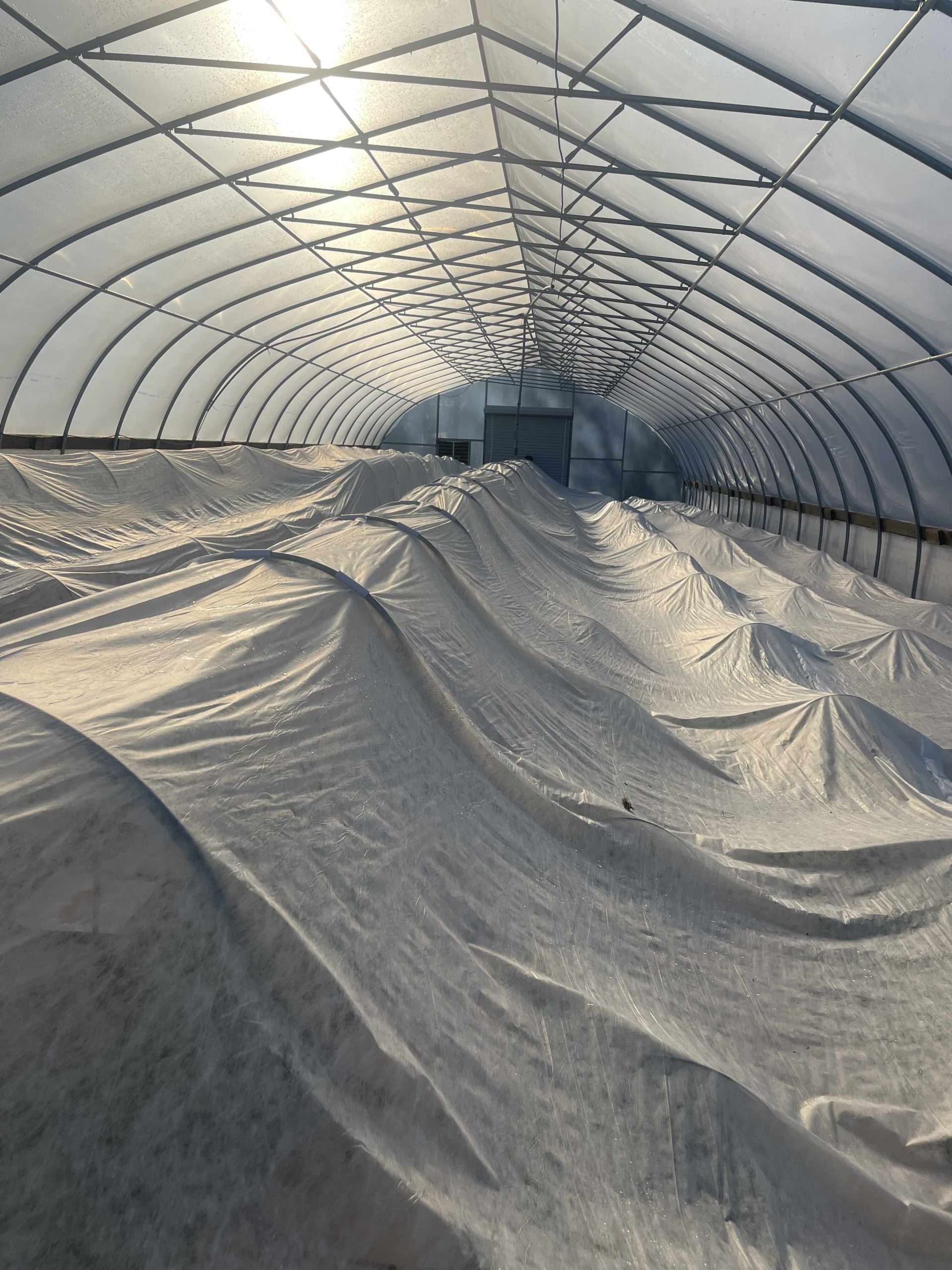
The covering, uncovering, venting, securing–
and the community it takes to bring those stems to life.
Because winter isn’t just a season. It’s a negotiation. And that spring magic is built on something far less glamorous: Local Farmers hustling through winter, every single day, to ensure those tender spring crops are perfect for you and your clients.


The Delicate Dance of “Goldilocks Season”
A lot of people assume overwintering spring flowers is just about keeping them warm. But the truth is more nuanced – and honestly, trickier.
For cut-flower growers, it’s a constant balance…
Protect plants from freezing temperatures.
But avoid overheating on sunny days!
And prevent condensation buildup that invites disease…
While keeping airflow moving so the soil stays healthy.
Annnnd adjust again as the forecast shifts by the hour.
It’s a daily rhythm of covering and uncovering, venting and closing, adjusting and re-adjusting…with the goal of keeping plants stable enough to keep growing steadily through winter.
Spring flowers don’t like drama.
They like consistency. And in winter, consistency has to be created.

“Just survived the coldest night of the year!”
Here’s What That Actually Means in Farmer Terms
In short: This past weekend, our regions saw a cold snap that pushed many of our farms into full-on protect mode.
Sunday night into Monday morning, temperatures ranged from roughly 4° to 14° across our footprint – and when that kind of cold moves in fast, it doesn’t arrive quietly.
Cold fronts like that are almost always paired with wind.
And wind is what turns a normal protection plan into a full-body sport.
Picture it: Farmers out in the field trying to cover long beds with giant strips of frost cloth while 25 mph gusts catch the fabric like a sail. They’re holding the edge of it, fighting the wind, trying to keep it from lifting, shifting, or tearing – because even a small gap can mean freeze damage on a crop you’ve been growing for months.
Many farms went into a layered approach this week:
Outside rows double- or triple-covered.
Low tunnels reinforced and re-secured.
Rows inside high tunnels given extra protection (yes, even inside).
Morning routines slowed down so crops warm gradually before venting.
It’s not just “cover it and walk away.”
Cover it, secure it, check it, re-secure it, check it again, and wake up early to do it all in reverse. And honestly, worry all night that a wind gust may have undone all your work!


Infrastructure Isn’t a Luxury. It’s a Bridge to Shoulder-Season Wholesale Flowers.
When designers ask, “Can we have local ranunculus earlier?” or “Are poppies possible in February?”
The honest answer: Only if farms have the infrastructure to protect them.
High tunnels & infrastructure extend seasons – but they don’t eliminate risk. They give growers a fighting chance. Add frost cloth. Add extra hoops. Add row cover layers. Add fans and venting strategies.
This is how shoulder-season flowers happen.
This is how quality stays high.
This is how crops survive the swings.
And here’s the key part:
That kind of infrastructure costs real money…upfront.
High tunnels. Frost cloth. Sandbags and clips and ground staples. Replacement plastic. Backup irrigation components. Extra labor on cold nights. Tools to move quickly when weather changes in hours – not days.


What your Stemz Orders Actually Do for Farmers
Every time you place a Priority Advance Order (PAO), you’re not just reserving stems.
You’re doing something bigger: you’re creating predictability for farmers– the most valuable thing a farmer can have in winter!
Predictable demand allows farms to:
Invest in infrastructure (high tunnels, cloth, hardware).
Hire and retain trained staff who know how to manage winter crops.
Expand plantings of the varieties you crave as designers.
Protect crops better when weather gets extreme.
Deliver higher quality blooms – more consistently – for designers
Your support becomes protection.
Your orders become tools.
Your planning becomes the bridge between
“maybe” and “we can make it happen.”

Your Spring Flowers are in Good Hands
Right now, even as winter sits heavy on the field, farms across our region are quietly doing the work that makes spring possible.
That ranunculus? It’s being protected today.
That foxglove? Someone’s checking the tunnels at sunrise.
Those poppies? They’re growing in slow motion — and farmers are guarding them like gold.
That’s the quiet truth behind early spring blooms: winter hands, working so your designs can feel effortless in the Spring.

Want More of What You Crave This Spring?
The best way to support the varieties you love – and help farms keep building the infrastructure that makes early season blooms possible — is to plan ahead.
Priority Advance Orders are more than planning.
They’re the foundation that lets regional farms grow confidently into shoulder seasons.
And when the next cold front hits, it’s your steady demand that helps our farms meet it – with more tools, more support, and more resilience.
Because spring doesn’t start in spring.
It starts in fall, and is fought for in winter.
From the field,
Farmer Claire

Written by Claire Parrish
Active Flower Farmer/ Owner of Heritage Harvest Farms & Stemz Co-founder